One interaction model for six billing teams
UX strategy for SAP’s subscription billing suite: one interaction model across six global teams that reduced errors and scaled across products.
- Company
- SAP
- Role
- UX design lead
- Timeline
- Mar 2018 – Apr 2022
- Scope
- Six global development teams, several products
Key results
- time-on-task efficiency
- +22%
- SUS score
- +18%
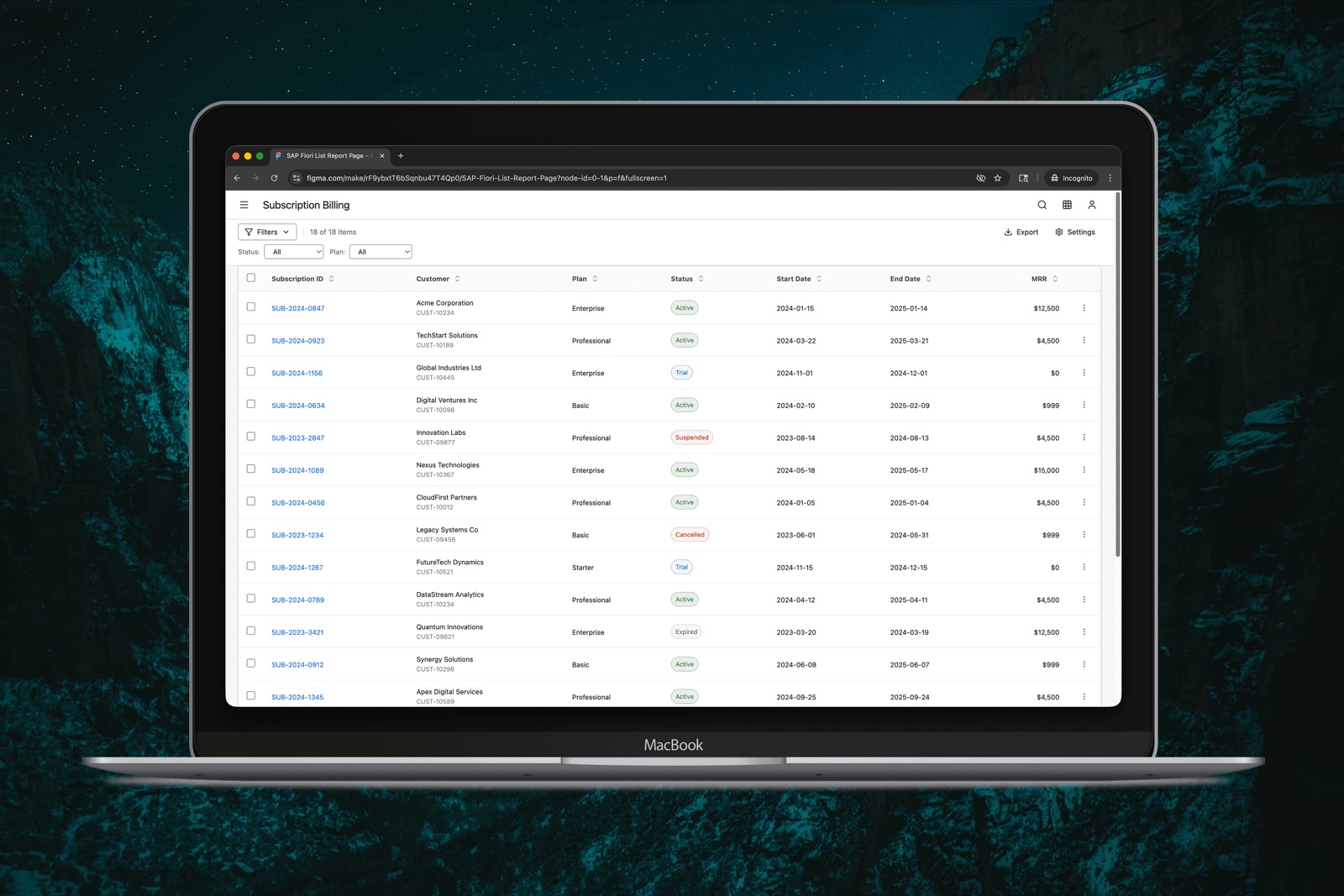
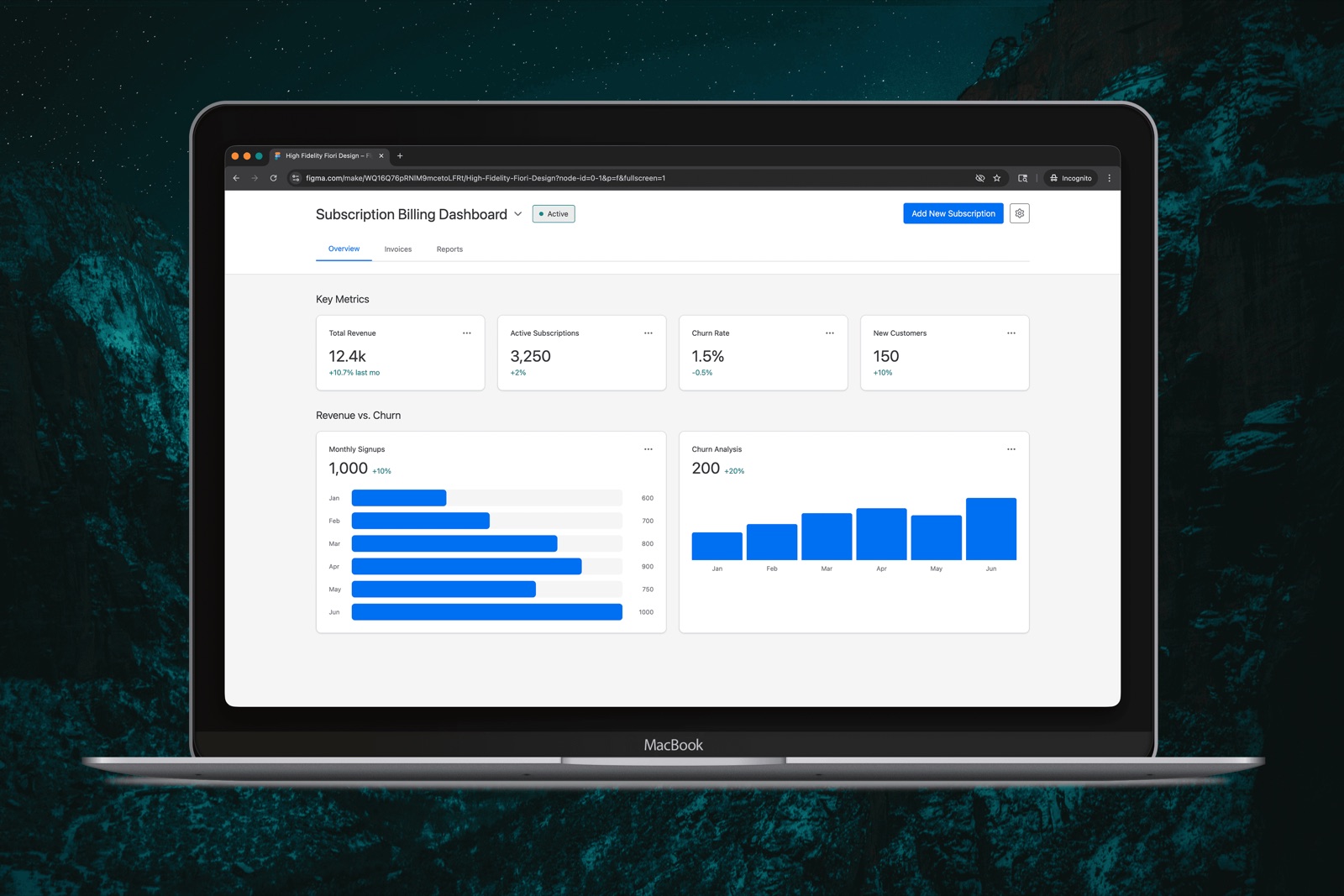
Screens
Problem
- Several loosely connected applications used by enterprise finance teams.
- Inconsistent patterns, fragmented navigation and legacy workflows raised onboarding time, user errors and operational risk.
- Risks: high error rates in billing setup, long time to proficiency, slow adoption.
Role
- Owned UX strategy across six global development teams.
- Defined cross-product interaction standards.
- Primary UX counterpart to product and engineering leadership.
Decisions
- Standardized object page and navigation models across products to reduce switching costs.
- Consistency over local optimization, even where teams wanted custom solutions.
- Trade-offs: less customization early to speed up adoption; niche workflows postponed to protect a coherent core.
Research
- 30+ qualitative interviews and 200+ survey responses from users worldwide.
- Found mismatches between the system structure and users’ mental models.
- Validated accessibility and error-handling gaps. Insights shaped the navigation architecture, error prevention and cross-app patterns.
Results
- +22% time-on-task efficiency and +18% SUS score.
- Faster onboarding for enterprise customers.
- The model became the reference for later products.
Reflection
- Earlier alignment with engineering leadership on technical constraints would have cut iteration cycles and sped up the rollout.